Wondering whether an HOA community in Northwest Albuquerque is the right fit for you? That is a smart question to ask before you fall in love with a home, because HOA living can shape your monthly costs, your access to amenities, and even what changes you can make to the property. If you are buying in this part of Bernalillo County, this guide will help you understand how HOA communities work, what dues may cover, and what documents you should review before closing. Let’s dive in.
HOA Living in Northwest Albuquerque
Northwest Albuquerque includes many recorded homeowners associations and master-planned communities. Under New Mexico law, an association has maintenance and operational responsibilities, and the community’s recorded documents govern the lots and common areas.
That structure matters because west-side living often includes neighborhoods with shared amenities, managed common areas, and formal rules. The area’s association density is reflected by the West Side Coalition of Neighborhood Associations, which covers Bernalillo County and the City of Albuquerque west of the Rio Grande.
Some communities are also part of larger master-planned developments. New Mexico law defines a master-planned community as a large-scale development built over time through local government review, which helps explain why some Northwest Albuquerque neighborhoods have layered documents, amenities, and fee structures.
What HOA Dues May Cover
One of the biggest questions buyers ask is simple: what do the dues actually pay for? In Northwest Albuquerque, the answer can go well beyond administrative costs.
Public HOA budget documents from Ventana Ranch show assessments supporting items like management fees, landscape maintenance, gate maintenance, pool maintenance, community patrol, water and sewer, snow removal, and reserve transfers. That means your dues may help fund both everyday operations and long-term upkeep.
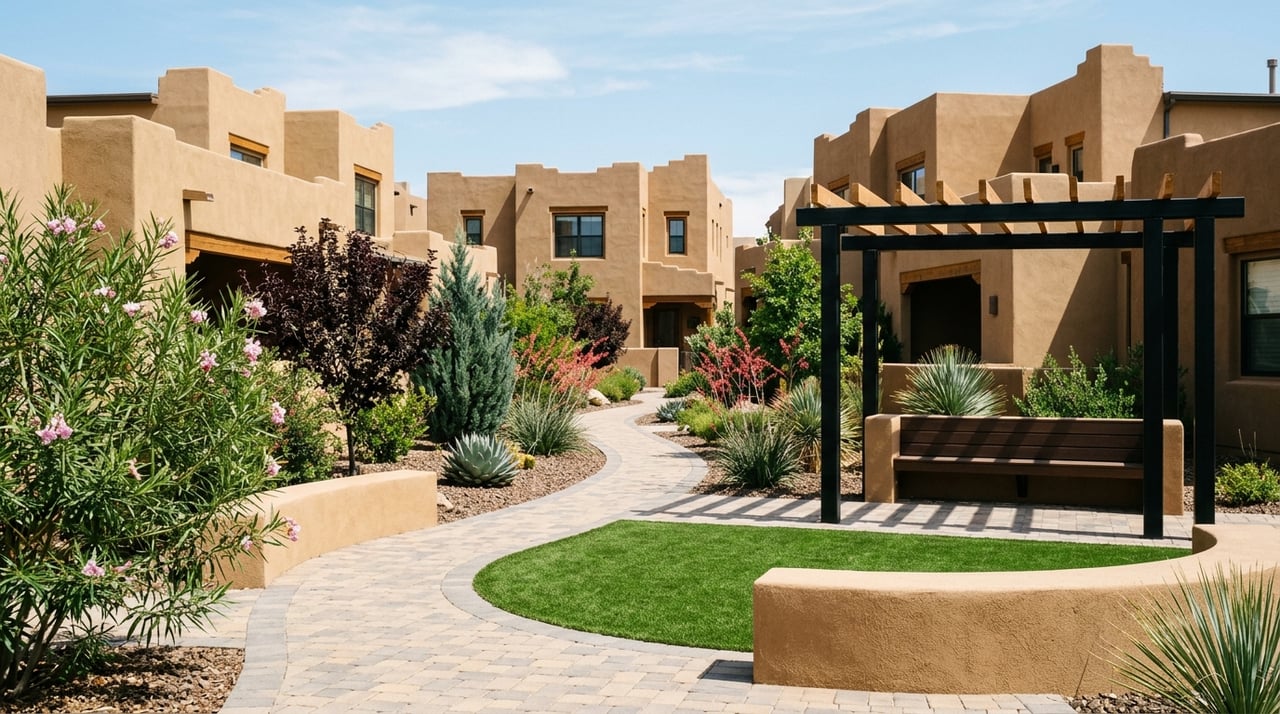
In some neighborhoods, dues also support shared lifestyle amenities. The Trails, for example, highlights features such as an open-air pavilion, playground, sand volleyball, walking trails, baseball and soccer parks, a fenced dog park, and open greenspace.
One Community May Have More Than One Fee
Not every HOA uses a simple single-fee setup. Some Northwest Albuquerque communities have both a master association and a subassociation, which can split costs into multiple assessments.
Ventana Ranch documents show that buyers may see separate line items for master-association dues, subassociation dues, total assessment amount, and payment frequency. If you are comparing homes, make sure you understand the full monthly or periodic total, not just one piece of it.
Rules, Approvals, and Day-to-Day Expectations
Amenities are only part of HOA living. The other side is compliance with community rules and approval processes.
New Mexico law makes it clear that community documents control the use of lots and common areas. In practical terms, that means your declaration, bylaws, CC&Rs, and rules can affect exterior changes, storage, use of shared spaces, and other visible property issues.
Local rules can be very specific. In The Trails, board resolutions address topics such as trash and recycle-bin storage and basketball-hoop hours, and the community’s enforcement policy uses escalating notices and fines for general violations and design-review issues.
How Enforcement Works
Under New Mexico law, HOAs may levy reasonable fines or suspend common-area use after written notice and an opportunity to dispute the violation. If a hearing is required, the association must generally provide 14 days’ notice unless there is an imminent health or safety threat.
The practical takeaway is that HOA life works best when you understand the expectations before you buy. If a home is in an HOA, it is worth reviewing how the community handles approvals, violations, fines, and amenity access.
What New Mexico Law Requires
New Mexico’s Homeowner Association Act sets several baseline requirements for many associations across the state. While some associations created before July 1, 2013 with fewer than 30 lots are exempt from certain provisions, the law generally gives buyers and owners a framework for transparency.
For example, associations must hold an annual meeting at least once every 13 months. The law also requires advance notice for board meetings, open-meeting rights for owners, and written minutes.
Annual budgets are also important. After adoption, the association must distribute the annual budget to owners, including a statement listing fees and fines that may be charged.
Owners also have record-review rights. New Mexico law states that HOA financial and other records must be made available within 10 business days of a written request, review is free, and copies may be charged at up to 10 cents per page.
The law also requires an independent CPA financial audit, review, or compilation at least every three years. The results must be made available within 30 days after completion, which gives owners another window into the association’s financial condition.
HOA Disclosures Before Closing
If you are buying an HOA home in Northwest Albuquerque, the disclosure process is one of the most important parts of your due diligence. New Mexico law requires the seller to provide the declaration, bylaws, applicable CC&Rs, rules, and a disclosure certificate before closing.
The seller must obtain the disclosure certificate from the association and deliver it to the buyer no later than seven days before closing. After receiving it, the buyer has seven days to cancel the contract.
That disclosure certificate is valuable because it is meant to summarize key facts about the HOA. It can include the monthly common-expense assessment, other fees, capital expenditures, reserves, the current operating budget, lawsuits, insurance, any recorded violations, and contact information.
Why the Disclosure Certificate Matters
This document gives you one of the clearest snapshots of the community’s financial and legal picture. Instead of guessing about the association’s health, you can review actual disclosures tied to the property and the HOA.
It is also the point where hidden costs or concerns may come into focus. You may learn about layered dues, reserve funding, pending capital expenses, or violations connected to the property.
Financial Risks Buyers Should Understand
HOA communities can offer convenience and shared amenities, but they also come with financial obligations that should not be overlooked. Recurring dues are only part of the picture.
You may also encounter special assessments, transfer or resale-certificate charges, and other fees listed in the budget or disclosure materials. That is why it is important to review both the headline dues and the supporting documents.
One of the biggest risks is unpaid HOA balances. Under New Mexico law, an HOA has a lien on a lot for unpaid assessments or fines, and that lien can be foreclosed in the same manner as a mortgage.
Because of that, buyers should confirm whether there are delinquencies, unpaid special assessments, or pending collection issues tied to the property before closing. A home’s price alone does not tell you the full financial story.
Smart Questions to Ask Before You Buy
If you are considering an HOA home in Northwest Albuquerque, a little document review can save a lot of stress later. This is where a clear, organized process really matters.
Here are some smart questions to ask during your due diligence:
- Is the home in a master association, a subassociation, or both?
- What are the current regular assessments, and how often are they paid?
- Are there any special assessments now or under discussion?
- What amenities are included, and are there any usage restrictions?
- How does the HOA handle design approvals, violations, fines, and hearings?
- Are there any recorded violations tied to the property?
- What do the current budget and reserve information show?
- Are there transfer fees or resale-certificate charges due before closing?
If the fee structure, reserves, or budget is unclear, have the documents reviewed by the appropriate real estate, title, legal, or financial professional before you move forward.
HOA Upsides and Tradeoffs
For many buyers, HOA living in Northwest Albuquerque comes down to a practical tradeoff. You may gain access to shared amenities, maintained common areas, and a more managed neighborhood environment.
Examples like The Trails and Ventana Ranch show how HOA structures can support trails, parks, pools, gates, patrol, and landscape upkeep. For some buyers, that added structure is a real benefit.
The tradeoffs are just as important to weigh. You may have recurring dues, possible special assessments, enforcement fines, and less flexibility over exterior changes or common-area use.
The best fit depends on your priorities. If you want shared amenities and managed upkeep, an HOA community may feel like a strong match. If you prefer fewer rules and fewer ongoing community fees, you may want to compare HOA and non-HOA options side by side.
Buying into an HOA is not just about the home itself. It is also about understanding the community’s documents, costs, and expectations so you can make a confident decision with fewer surprises.
If you are comparing Northwest Albuquerque neighborhoods and want a clear, organized look at how an HOA may affect your purchase, Andrea A Romero can help you evaluate the details and move forward with confidence.
FAQs
What does an HOA in Northwest Albuquerque usually cover?
- HOA dues in Northwest Albuquerque may cover items such as landscape maintenance, management fees, gate maintenance, pool maintenance, community patrol, water and sewer, snow removal, reserve funding, and shared amenities, depending on the community.
What documents should you review before buying an HOA home in Northwest Albuquerque?
- You should review the declaration, bylaws, CC&Rs, rules, disclosure certificate, current budget, and reserve information before closing on an HOA home in Northwest Albuquerque.
Can a Northwest Albuquerque HOA charge more than one fee?
- Yes. Some communities have layered structures with both a master association and a subassociation, so your total dues may include more than one assessment.
How do HOA rules work in Northwest Albuquerque communities?
- HOA rules are set by the community’s governing documents and may address lot use, common-area use, exterior issues, storage, and design-review requirements.
What happens if HOA dues or fines go unpaid in New Mexico?
- Under New Mexico law, an HOA may have a lien on the lot for unpaid assessments or fines, and that lien can be foreclosed in the same manner as a mortgage.
How much time do buyers have to review HOA disclosures in New Mexico?
- After receiving the disclosure certificate, a buyer has seven days to cancel the contract under New Mexico law.